
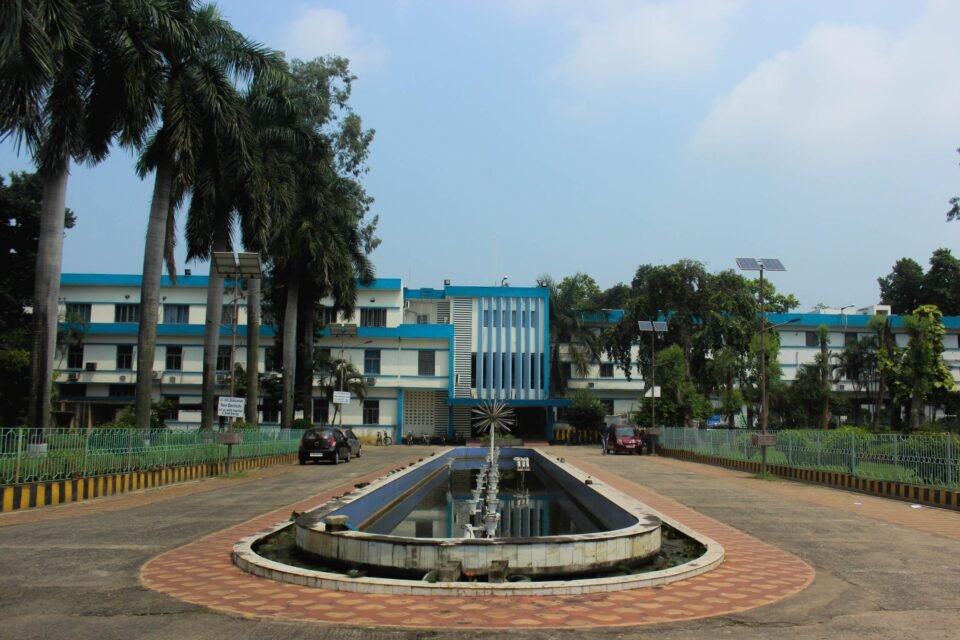
Durgapur: The ongoing recruitment process for the post of Assistant Registrar (Pay Level-10) at the National Institute of Technology Durgapur (NIT Durgapur) has come under scrutiny after a candidate raised a series of questions over the eligibility lists, conduct of the written examination, attendance records and disclosure of evaluation-related information.
The candidate, who appeared for the written examination held on September 12, 2026, has submitted a representation to the Directors of National Institutes of Technology (NITs) and Indian Institutes of Technology (IITs) across India, seeking an impartial fact-finding inquiry into the issues raised.
The representation does not allege wrongdoing by any particular individual. Instead, the candidate has sought verification of official records and clarification of what has been described as objectively verifiable procedural discrepancies.
Contradiction in eligibility lists
One of the principal concerns relates to the eligibility status of a particular candidate bearing roll number NITDGP/06-A/00760.
According to the representation, the roll number appeared in the list of candidates declared eligible for the interview published on September 12. However, the same roll number had allegedly appeared in the list of ineligible candidates published on August 25.
The candidate submitting the representation says that, when clarification was sought, it was reportedly explained that the candidate had already been declared eligible in a provisional list published on July 6.
This has prompted questions about why the roll number appeared in the subsequent ineligible list and on what documented basis the candidate was later considered eligible for Phase-II, comprising the presentation-cum-interview.
The representation has also sought clarification on whether any eligibility lists were revised or corrected and, if so, whether such changes were formally authorised, documented and communicated to the candidates concerned.
Questions over examination timing and admit cards
The candidate has also raised concerns about the conduct of the written examination.
The examination was scheduled to begin at 9:30 a.m., but the candidate claims that it commenced at approximately 10:19 a.m. The representation has requested that examination-hall CCTV footage and other contemporaneous records be examined to establish the actual commencement time.
Another issue concerns the admit card. According to the representation, a notification issued on September 16 stated that the copy of the email sent to candidates would be treated as the admit card.
The candidate has questioned whether an email copy without a clearly mentioned roll number, photograph or complete identification particulars could adequately establish the identity and eligibility of an individual candidate for the examination.
OMR sheets, question papers and marks
The representation further states that candidates were not provided copies of their OMR response sheets or the question paper.
It also raises concerns over the absence of an authenticated attendance or participation certificate or a signed acknowledgement from an invigilator.
The candidate has sought disclosure of the marks obtained by candidates, the cut-off marks and the criteria used to prepare the list of candidates shortlisted for the interview, subject to applicable laws and institutional regulations.
According to the representation, access to such records is important for candidates to independently verify their participation, responses, evaluation and shortlisting.
Discrepancy in candidate serial number
The candidate has also highlighted an apparent discrepancy in his or her own serial number.
According to the representation, 788 candidates were declared eligible for the written examination on August 25. The candidate’s name appeared at Serial No. 534 in that eligibility list.
However, on the examination day, the candidate claims that the serial number recorded against the name in the attendance sheet was 559.
The representation has requested verification of the candidate master list, attendance records and related examination documents to determine the reason for the change and whether it has any relevance to the actual number of candidates who appeared for the examination.
Demand for preservation of records
The candidate has urged the concerned authorities to preserve and examine all relevant records connected with the recruitment process.
These include different versions of eligibility lists, scrutiny records, attendance sheets, OMR sheets or answer scripts, question-paper records, invigilator reports, CCTV footage, evaluation and tabulation sheets, candidate marks, cut-off marks, shortlisting criteria, email communications, file notes and records of the relevant selection committees.
The representation has also called for the final selection process to be kept in abeyance, if permissible under the applicable rules, until the concerns are independently examined.
If an inquiry establishes that any discrepancies materially affected the fairness or reliability of the recruitment process, the candidate has sought appropriate consequential action, including the possibility of cancelling the examination and conducting a fresh examination in accordance with the applicable rules.
Appeal to NITs and IITs
The candidate has appealed to the Directors of NITs and IITs to take note of the concerns and, where appropriate, raise the matter with the Ministry of Education, Government of India, and the Board of Governors of NIT Durgapur.
The representation also seeks guidance on appropriate grievance-redressal mechanisms, including the Right to Information Act and the Centralised Public Grievance Redress and Monitoring System (CPGRAMS).
The candidate has stressed that the representation is not intended to make any personal allegation against an individual. Rather, the stated objective is to ensure that the relevant records are preserved and independently examined so that the recruitment process remains transparent and commands the confidence of participating candidates.
The issues raised will ultimately require verification against the original examination and recruitment records before any conclusion can be drawn about their impact on the selection process.
